
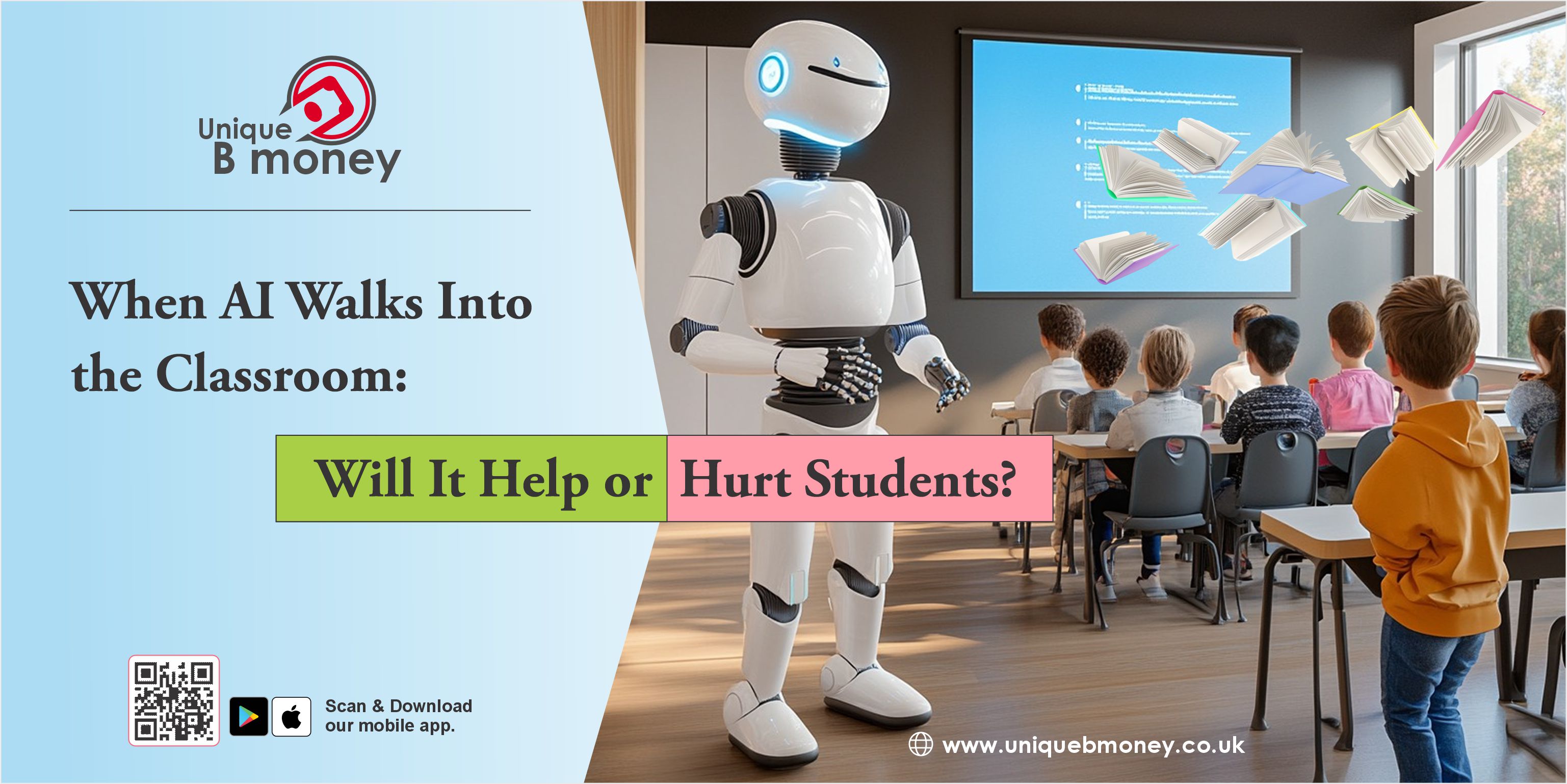
When AI Walks Into the Classroom: Will It Help or Hurt Students?
Can AI really make a difference in classrooms?
Artificial Intelligence (AI) is no longer a distant idea—it’s becoming part of schools across the UK. Some colleges are using AI to personalise learning, while others are debating limits to prevent misuse. High school AI tools can adapt lessons to each student’s pace, helping them understand difficult concepts faster. But the big question remains: will AI truly improve student learning , or could it create new challenges for teachers and students?
AI offers some clear benefits. For students, AI can provide personalised education , highlighting areas where they struggle and giving instant feedback. Teachers also gain support: grading, attendance, and other administrative tasks can be handled by AI, freeing up time to focus on teaching and mentoring. In this way, AI can prepare students for a digital future , giving them skills they will need in work and life.
What are the risks of using AI in schools?
Even with these benefits, there are risks. Students might become too reliant on AI, which can limit critical thinking and problem-solving skills. There’s also the risk of cheating if AI is misused. Not every student has equal access to devices or the internet, which could widen the learning gap. Plus, AI collects sensitive student data, so privacy and security must be carefully managed.
Educators and parents have mixed feelings about AI in classrooms. Many teachers see it as a helpful “assistant” that supports learning, while some parents worry about too much screen time and the loss of human interaction. Recent examples in the UK even show students finding clever ways to “beat” AI in assignments, showing that guidance and ethics are still essential.
So, how can schools use AI responsibly? They should make sure all students have access to technology, implement strong data protection rules, and keep human teachers in charge of learning decisions. Teaching students how to use AI safely is just as important—this ensures the technology enhances learning rather than replacing critical thinking skills.
Interestingly, the rise of digital tools in education is similar to advances in financial technology. Services like Unique B allow families to transfer money to Nigeria quickly and safely, supporting tuition, books, or online courses. Just as AI personalises learning for students, sending money to Nigeria through reliable services ensures they have the financial support needed to succeed.
In the end, AI in classrooms can be a powerful tool if used thoughtfully. By combining technology with human guidance, schools can boost student learning while preparing young people for a digital future . With the right approach, AI and trusted services like Unique B can both make learning easier and support students’ wider educational journeys.